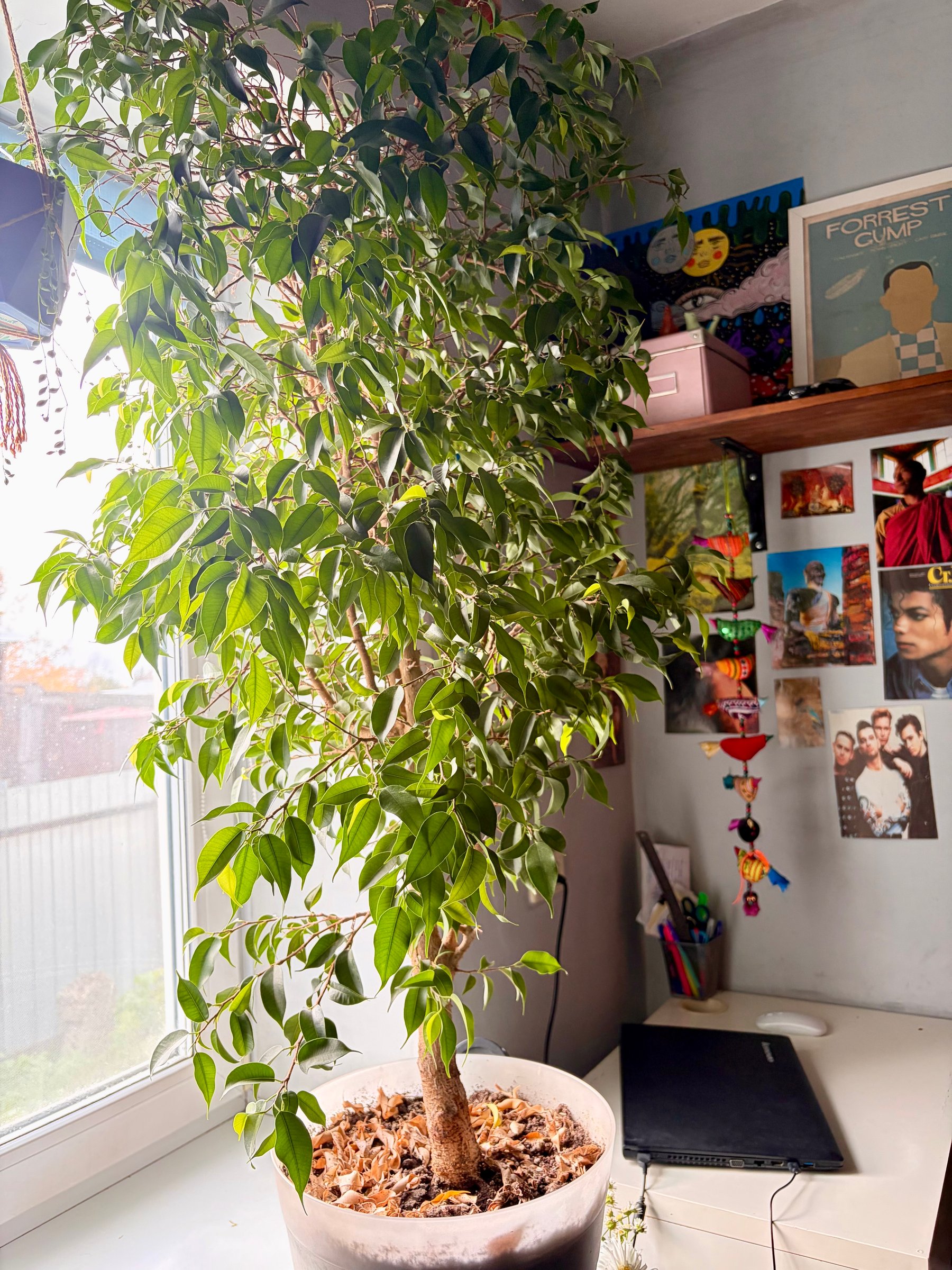
In fall, a ficus can sometimes start dropping leaves one after another. And it took me a long time to realize just how much light has to do with it.
My ficuses handle summer heat just fine, even on a southeast-facing window. They also don't mind it when the soil dries out now and then. I've noticed something interesting, too: plants seem to get used to whatever watering routine they're on. If someone has spent years never letting the soil dry out even a little, a sudden dry spell can really stress the plant. But mine are perfectly fine if the soil stays dry for a while. Of course, I'm not talking about leaving them without water for weeks. I just don't rush to water the moment the top layer dries out.
My ficuses handle summer heat just fine, even on a southeast-facing window. They also don't mind it when the soil dries out now and then. I've noticed something interesting, too: plants seem to get used to whatever watering routine they're on. If someone has spent years never letting the soil dry out even a little, a sudden dry spell can really stress the plant. But mine are perfectly fine if the soil stays dry for a while. Of course, I'm not talking about leaving them without water for weeks. I just don't rush to water the moment the top layer dries out.
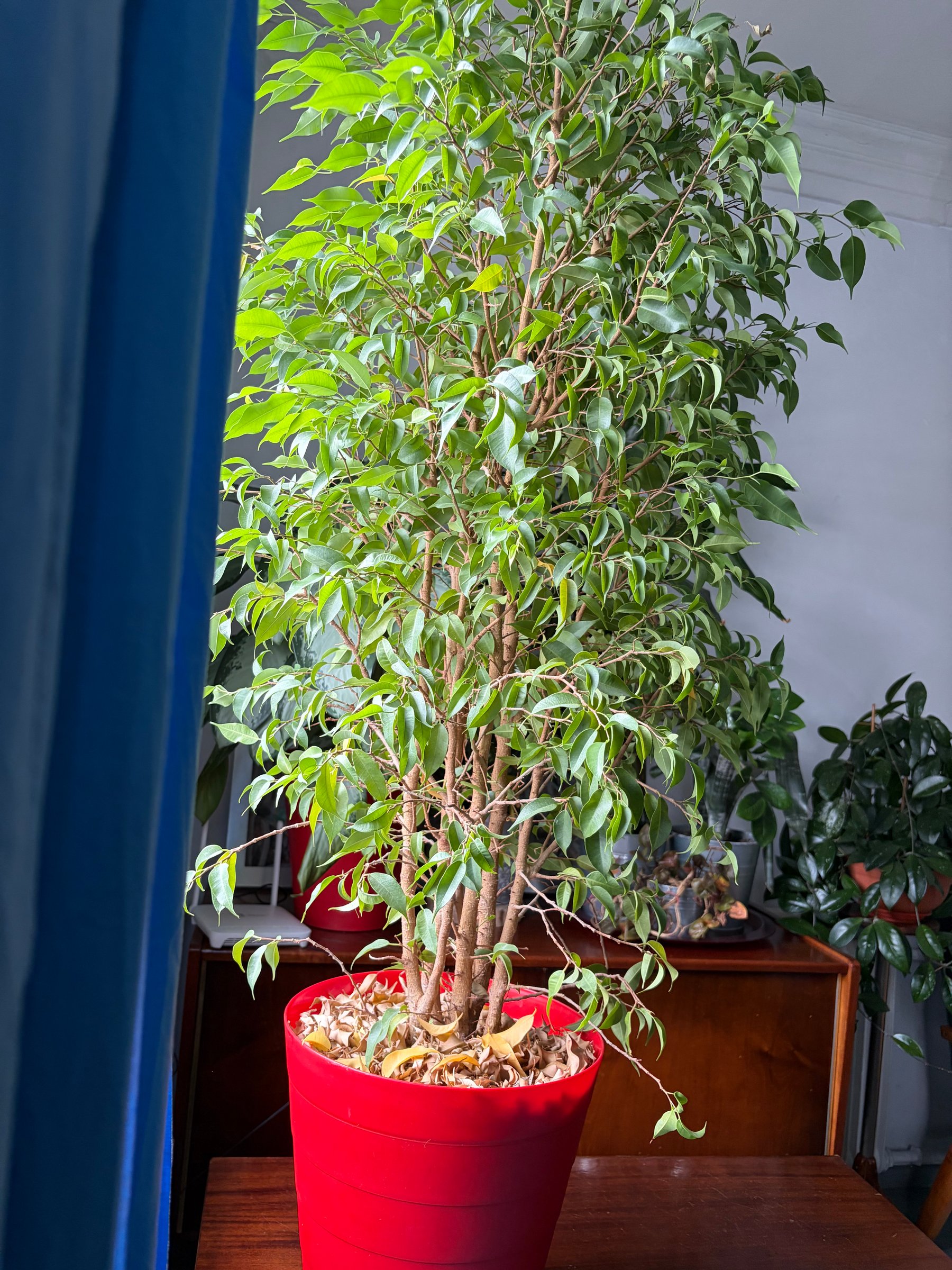
Autumn light, though, really does matter. In summer the days are long and the sun is high, so a ficus can do well even a bit farther from the window. It seems like it's getting plenty of light. But in fall the days get shorter, the sun sits lower, and there are more overcast days, so a spot that looked bright enough in summer suddenly offers the plant completely different conditions.
I've had ficuses start shedding leaves en masse in the fall right after the light dropped off. And it's not like the room looked especially dark. At first I didn't even think light was that important. Then I started noticing a pattern: the less light, the more leaves fall.
Then the foliage grew back and the plant recovered beautifully. So fall leaf drop doesn't necessarily mean your ficus is dying. Still, it's not a pretty sight, and you feel bad for the plant.
What can you do? First of all, move it closer to the window if you can. But there's a catch, especially with big ficuses. Getting a huge plant close to the light, keeping it from touching the cold glass, and still fitting it comfortably into the room isn't an easy task.
There have been times when I physically couldn't give a ficus the ideal spot. During a renovation, for example, there was simply no way to put it where the light would be better. It dropped almost all of its leaves. But once things got back to normal, it grew a full canopy again and was doing great.
So I wouldn't treat fall leaf drop as a reason to overhaul your whole care routine right away. Look at the light first.
That said, you do need to adjust your watering a bit in the fall. When there's less light, the plant usually uses water more slowly, so the soil takes longer to dry out. Don't stick to your summer watering schedule. But there's no need to deliberately keep the ficus dry either. Go by the condition of the soil and the plant.
It's also important not to put the ficus right up against cold glass or in the path of a cold draft when you air out the room. Size makes this harder again: the bigger the plant, the harder it is to give it plenty of light and protect it from a cold window at the same time.
Once the heating season starts, keep an eye on radiators too. Hot, dry air can dry out the leaves, especially if the plant is sitting right above a radiator. You can wipe the leaves down now and then to get rid of dust, and it's best to keep the plant away from heat sources.
Don't ramp up fertilizing in the fall either, thinking it'll "support" the ficus. If there's little light and no active growth, extra fertilizer won't fix a lighting problem. That said, when my aglaonema once started turning very yellow, I bought a fertilizer meant for yellowing leaves. I didn't expect much, but to my surprise it actually worked, and the plant looked so much better. I've used it on my ficuses too, and I pretty much keep using it as my regular feed.
I've had ficuses start shedding leaves en masse in the fall right after the light dropped off. And it's not like the room looked especially dark. At first I didn't even think light was that important. Then I started noticing a pattern: the less light, the more leaves fall.
Then the foliage grew back and the plant recovered beautifully. So fall leaf drop doesn't necessarily mean your ficus is dying. Still, it's not a pretty sight, and you feel bad for the plant.
What can you do? First of all, move it closer to the window if you can. But there's a catch, especially with big ficuses. Getting a huge plant close to the light, keeping it from touching the cold glass, and still fitting it comfortably into the room isn't an easy task.
There have been times when I physically couldn't give a ficus the ideal spot. During a renovation, for example, there was simply no way to put it where the light would be better. It dropped almost all of its leaves. But once things got back to normal, it grew a full canopy again and was doing great.
So I wouldn't treat fall leaf drop as a reason to overhaul your whole care routine right away. Look at the light first.
That said, you do need to adjust your watering a bit in the fall. When there's less light, the plant usually uses water more slowly, so the soil takes longer to dry out. Don't stick to your summer watering schedule. But there's no need to deliberately keep the ficus dry either. Go by the condition of the soil and the plant.
It's also important not to put the ficus right up against cold glass or in the path of a cold draft when you air out the room. Size makes this harder again: the bigger the plant, the harder it is to give it plenty of light and protect it from a cold window at the same time.
Once the heating season starts, keep an eye on radiators too. Hot, dry air can dry out the leaves, especially if the plant is sitting right above a radiator. You can wipe the leaves down now and then to get rid of dust, and it's best to keep the plant away from heat sources.
Don't ramp up fertilizing in the fall either, thinking it'll "support" the ficus. If there's little light and no active growth, extra fertilizer won't fix a lighting problem. That said, when my aglaonema once started turning very yellow, I bought a fertilizer meant for yellowing leaves. I didn't expect much, but to my surprise it actually worked, and the plant looked so much better. I've used it on my ficuses too, and I pretty much keep using it as my regular feed.